
One of the many fucked up things in Carrie is because of Chris Hargenson's vote-tampering shenanigans, we never learn who really won king and queen of the prom. Judging from the honest reaction of their classmates, it's entirely believable that Carrie and Tommy could have legitimately won without Chris' vote tampering.
— Quentin Tarantino (Cinema Speculation)
In my view, [a] personal unpleasantness marks [John MIlius] films – he wrote Dirty Harry – whereas De Palma’s are simply fatuous: enjoyably fatuous when the schlock is whipped thick enough, and unendurably fatuous when it isn’t. Pye and Myles’s interview [in The Movie Brats] catches him exquisitely unhappy that he has not yet had a monster hit like the others. He feels he needs it as a passport to power within the system. But in his case the power seems purely for its own end. He wants to fashion objects which are more successful than other people’s objects, but I can’t see, at least from the evidence of the heavily menstruating Carrie, that he has much idea what the power might be for.
— David Hare (London Review of Books)
A film from the pre–John Hughes era, Carrie was ahead of its time in its naturalistic depiction of high school as a breeding ground for neuroses. Stephen King’s central idea is a good, nasty one, even if it’s always seemed a bit dubious for having come from a male novelist: a teenage girl’s coming of age—literally her menstruation—triggers her latent telekinesis, which grows in power until the climactic torrent of violence. The equation of a young woman’s late-blooming puberty with the uncorking of supernatural powers could be read as inherently offensive, but it’s also in keeping with the genre’s tradition of the female body as a locus of horror. Carrie doesn’t critique this tradition, exactly, but De Palma does make his main character so intensely likable that one would be hard-pressed to side with anyone but her, even when she becomes the image of fiery hell itself.
— Michael Koresky (Reverse Shot)
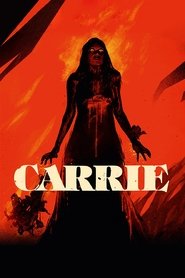

Synopsis: Withdrawn and sensitive teenager Carrie White faces bullying from her classmates and abuse from her fanatically pious mother. When she begins to suspect that she has supernatural powers, things take a dark and violent turn.