
The two versions of Being There divide the labor of Searle’s [Chinese Room] argument. The novel [takes] a subjective approach from inside the room, showing us the workings of Chance’s cloistered mind. This is Searle’s privileged vantage, the position from which one can declare there is no real understanding. The film – with a screenplay by Kosinski himself – shifts to an objective view from outside the room. This is the seat of Alan Turing’s interrogator, the human judge tasked with determining whether an intelligence is human or artificial. We never hear Chance think in voiceover; uncredited script doctor and frequent Ashby collaborator Robert C. Jones wisely excised all internal monologue from Kosinski’s draft. The viewer receives exactly what the film’s other characters receive – a calm face, a beautiful suit, a measured voice – and is invited to draw the same inferences. If the novel proves the room is empty, the film demonstrates why, from outside the room, that proof is unavailable.
— Ben Schwartz (Bright Lights)
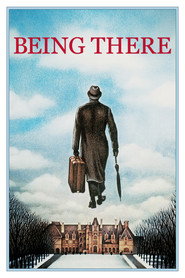

Synopsis: A simple-minded gardener named Chance has spent all his life in the Washington D.C. house of an old man. When the man dies, Chance is put out on the street with no knowledge of the world except what he has learned from television.