
It is a work of art about a man who tried to become a work of art.
Takashi Inoue, a professor of modern Japanese literature and Mishima specialist in Tokyo, said the dispute surrounding Schrader’s film was never truly about homosexuality or right-wing intimidation. Those debates, he said, “functioned as convenient distractions, masking the deeper issue of Japan’s lost sovereignty.” Mishima’s fixation on the emperor and bushido, the samurai code, dramatized an anxiety many quietly shared: that postwar prosperity had come at the cost of autonomy and spiritual integrity. “The core issue Mishima and his death laid bare was the political asymmetry between Japan and the United States — an ‘inconvenient truth’” that many preferred to ignore while pursuing economic growth during the boom years, Inoue said.
— Rebecca L. Davis (New York Times)
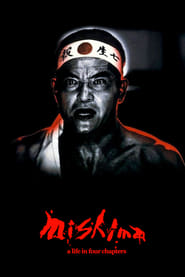


Synopsis: A fictional account of the life of Japanese author Yukio Mishima, combining dramatizations of three of his novels and a depiction of the events of November 25th, 1970.